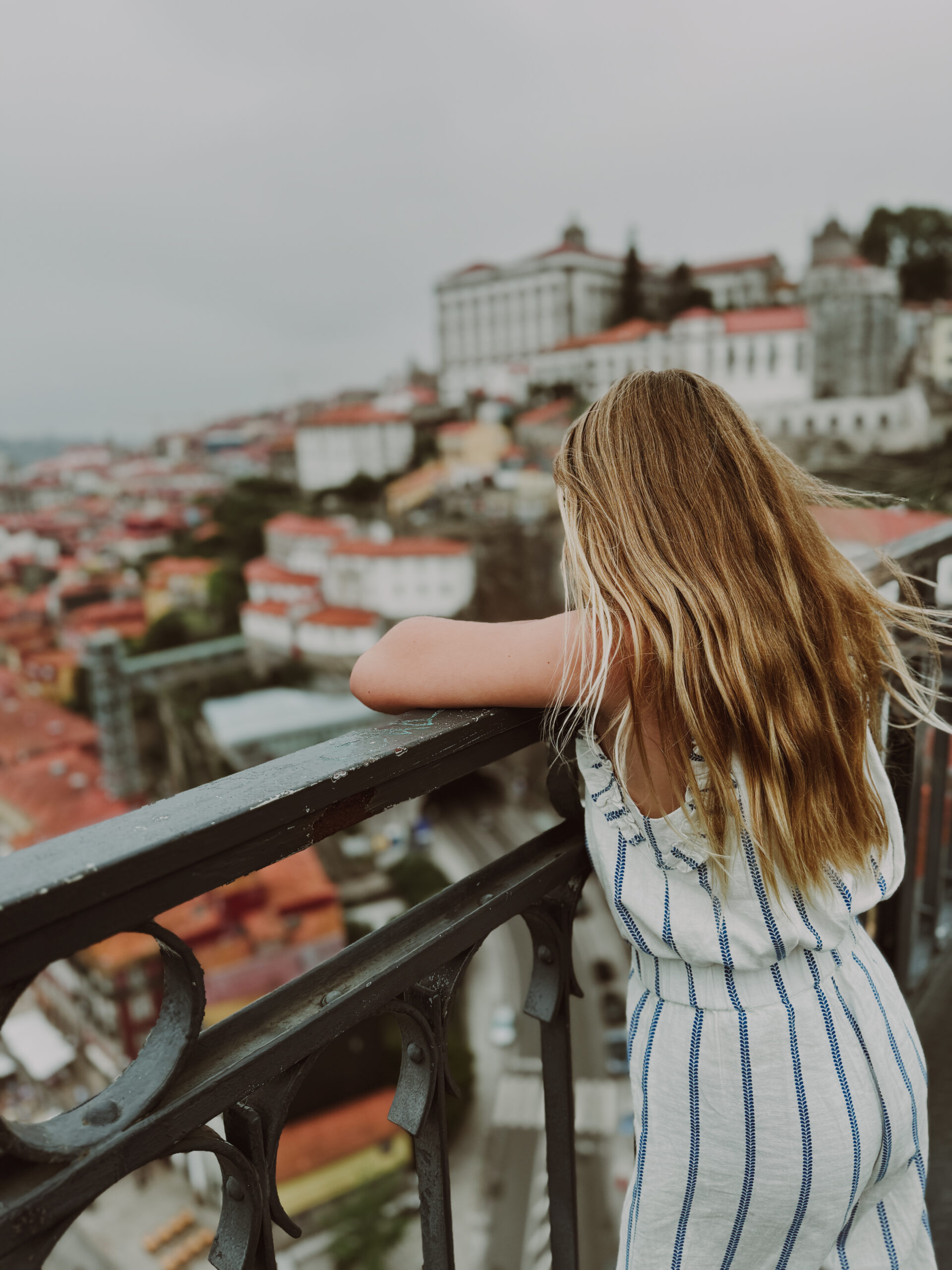
Porto with Kids: How to Do It in 2 Days (And Why You’ll Wish You Booked More)

If you are planning a trip to Portugal with your family, you have probably already built your whole itinerary around Lisbon. Lisbon is great. But I am here to make a case for Porto with kids as the better first stop, or at minimum the equally worthy one that deserves more credit than it gets. We visited both cities with our kids, ages 4 and 9, and Porto won. Decisively. It felt lived-in, less aggressively touristy, and more like a real city that happens to welcome visitors rather than one that was engineered for them. My kids loved it. I loved it. And unlike Lisbon, I did not spend two full days white-knuckling a stroller up cobblestones wondering what I had done.
Two days in Porto with kids is enough to hit the highlights and leave wanting more. That is exactly what happened to us, and we are already plotting a return trip to use Porto as a base and add a day in the Douro Valley. Here is exactly how to spend your time.
Planning the bigger Portugal trip? Read my Lisbon with Kids guide.

Is Porto with Kids Worth Visiting?
Yes, without qualification.
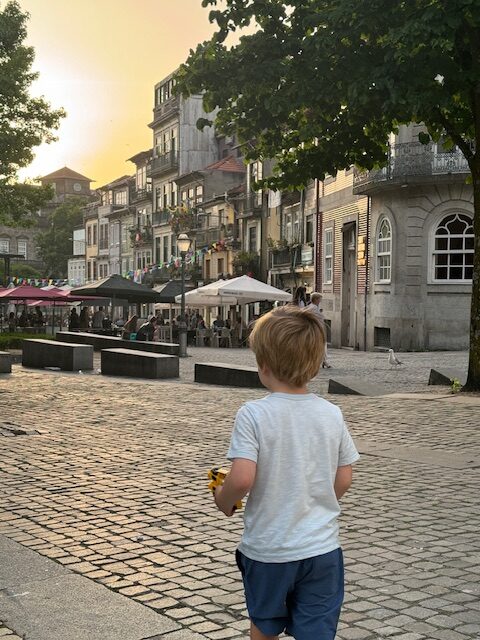
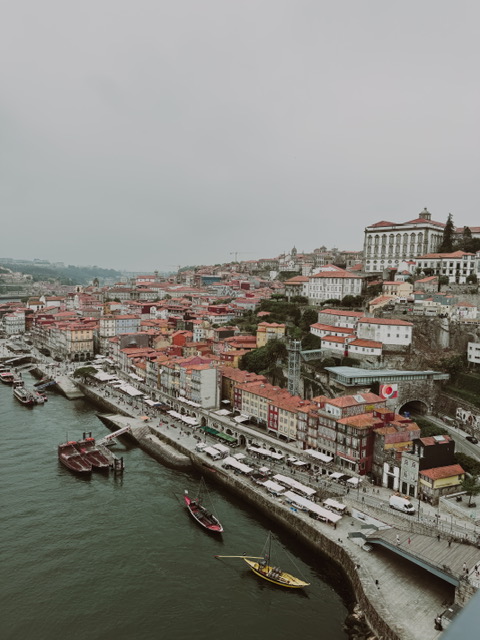
Porto with kids works for reasons that are easy to underestimate from a map. The historic center is compact, which means you can actually walk to most things without a car or a complicated metro strategy. The city has a genuine neighborhood feel — coffee shops, bakeries, families eating outside, locals going about their lives. It does not feel like a theme park version of Portugal, which in 2025 is increasingly hard to say about a lot of European cities.
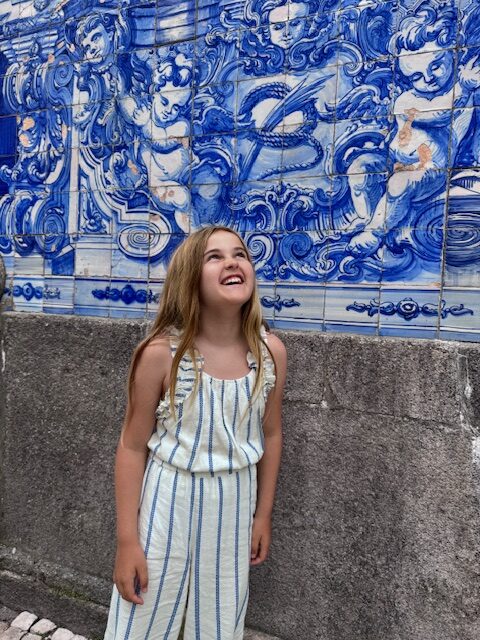
It is also visually extraordinary. The azulejos (the famous painted tile facades), the iron bridge spanning the Douro, the stacked terracotta rooftops — Porto punches above its weight, and kids notice that stuff even when they claim they do not care about architecture.
The one thing I will not soften: the hills. Porto is hilly. It is not as punishing as Lisbon, in my experience, but it is still significant. Bring a carrier as backup if you have a toddler. If your kids are old enough to walk independently, budget extra time and pack snacks. That is just the reality of visiting, and no amount of enthusiasm about the tiles changes it.
Where to Stay in Porto with Kids: Torel 1884
Porto with kids is so easy thanks to Torel 1884! We stayed with Torel 1884 Suites & Apartments, and for families who want a genuine luxury base that also functions practically, it is an excellent call.
Here is what makes Torel 1884 a little different from a standard hotel: it operates across two buildings. The main palace on Rua Mouzinho da Silveira is where you check in — a gorgeous 19th-century building that earned a Michelin Key, with 12 rooms and suites each inspired by a thread of Portuguese history. Themed rooms named for things like “Café,” “Porcelain,” and “Malagueta” make the property genuinely interesting to wander even if you are just picking up your key.
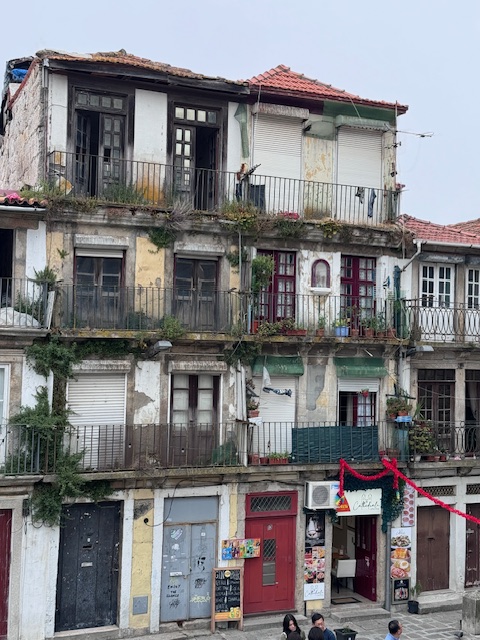
We stayed in the apartments, located a two-minute walk away on Rua das Flores. If you are not familiar with this street, Rua das Flores is one of Porto’s most beautiful pedestrian-only streets — about 500 years old, lined with azulejo-covered buildings, independent shops, restaurants, and cafés, with live music drifting through at various hours of the day. It is genuinely lovely to walk out your front door onto that street every morning. The apartment itself gave us real space — a kitchenette, a living area, room for everyone to spread out — which matters enormously when you are traveling with young kids.
Bartolomeu Bistro & Wine, the hotel’s restaurant, serves breakfast (approximately €25 for adults, €12.50 for children) and is worth doing at least one morning. The concierge service is attentive and legitimately useful for restaurant reservations and logistics.
Day 1: The Historic Center, Tiles, and the Cathedral
Start at São Bento Train Station
Begin here even if you are not catching a train. The main hall of São Bento is covered in more than 20,000 azulejos depicting Portuguese history — battles, landscapes, scenes of daily life in northern Portugal. It is free, takes about 20 minutes, and sets the stage for understanding why the tile obsession in this country is actually legitimate and not just a tourist pitch. Kids who have no patience for museums can usually handle this because it is visual and busy and there is always another panel to look at.
One practical note: it is a functioning train station, which means it is often crowded. Come early if you can, and if you are not on a guided tour, linger a few minutes after the tour groups move on — the ambiance is better when it is quieter.
Igreja do Carmo
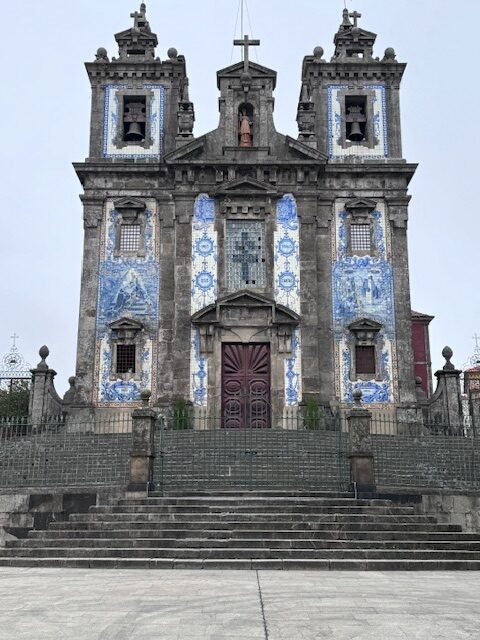
A short walk from Livraria Lello, the Igreja do Carmo is one of the most visually arresting stops on any Porto itinerary. The exterior side wall is covered in one of the city’s most spectacular azulejo panels — a massive 18th-century blue-and-white tile mural depicting scenes from Carmelite history, designed by Silvestro Silvestri and added in 1912. You do not need to go inside to appreciate it. Just stand in front of it and take it in. It is one of those things that genuinely stops you mid-stride.
Also worth noting: between Igreja do Carmo and the neighboring Igreja dos Carmelitas, there is a 1.5-meter-wide house built in 1676 to physically separate the two religious communities (monks on one side, nuns on the other, no shared walls permitted). It is reportedly the narrowest house in Porto. Kids find this either fascinating or completely boring, but it costs nothing to look at.
The Sé do Porto: The Best Tiles We Saw
This is the one I want to make sure you do not skip, because it is easy to dismiss as just another cathedral exterior and walk on. Do not do that.
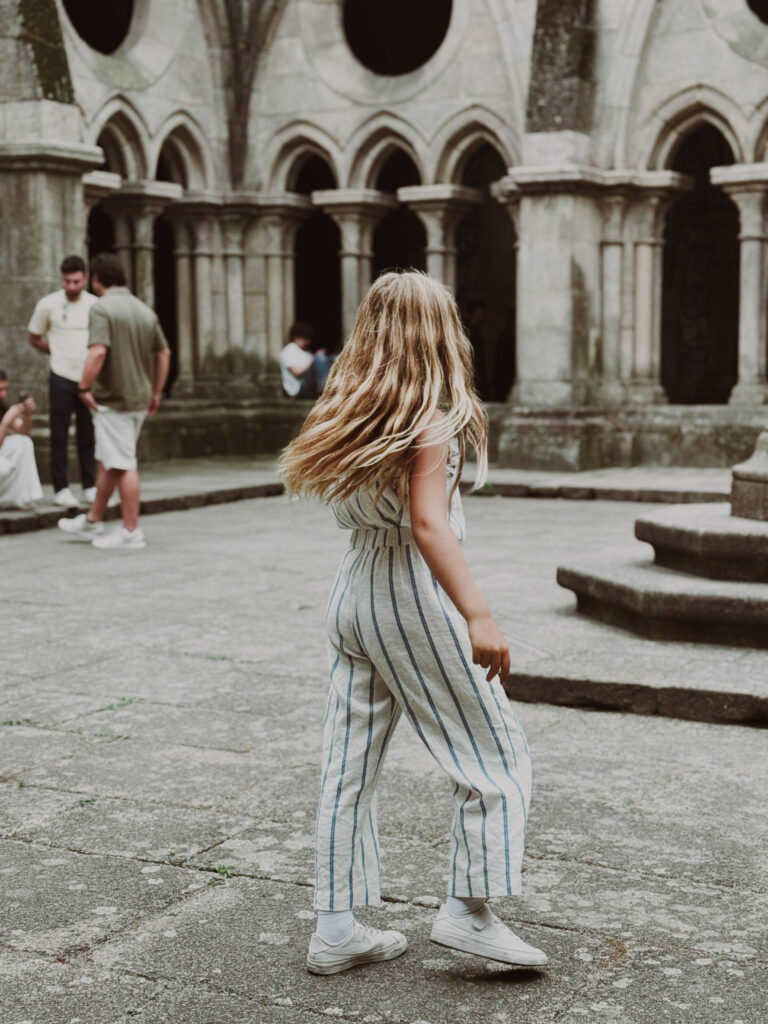
The Sé do Porto — the Porto Cathedral — sits high on a hill about ten minutes on foot from Ponte Dom Luís I. From the outside it looks almost fortress-like, and the views over the city from the surrounding terrace are worth the uphill walk on their own. But the real reason to go inside is the Gothic cloister.
The cloister is an open courtyard, and its walls are lined with large blue-and-white azulejo panels depicting scenes from the Song of Songs. They are extraordinary — detailed, atmospheric, and in a setting (stone arches, open sky above, city views just beyond) that photographs cannot fully do justice. It is quiet, it is beautiful, and almost nobody is paying attention to it because they already spent their tile energy at São Bento. Admission to the cloister and treasury is a few euros; children under 12 are generally free.
We spent longer here than we planned, which is a reliable sign that something is worth visiting.
The Chapel of Souls
If you have not hit your azulejo quota yet — and honestly, you should not have — add the Chapel of Souls (Capela das Almas) on Rua de Santa Catarina. The entire exterior is covered in approximately 16,000 blue and white tiles depicting the death of St. Francis of Assisi and the martyrdom of Santa Catarina. It is dramatic and beautiful and the most-photographed tile facade in the city for good reason. The street is busy so getting a clear photo takes patience, but it is worth it.
Livraria Lello
I will be honest: we did not go in. The queue the day we visited was unreasonable, and I could not justify the wait with a 4-year-old who had already been walking for three hours. Admission runs around €9 per person (redeemable against a book purchase), and if you have a Harry Potter enthusiast in your group it may be worth the wait. For everyone else, the Neo-Gothic facade from the street is genuinely beautiful and entirely free. I have zero regrets about skipping the interior, and I would make the same call again.
Mercado do Bolhão
Porto’s main covered market is a good lunch stop — recently renovated, atmospheric, and practical. Pick up pastéis de nata, local cheese, charcuterie, fruit. Portions in Porto are large, prices are fair, and this is an excellent strategy if your kids are in a “keep moving” phase and a sit-down restaurant sounds like too much commitment.
On the Subject of Pastéis de Nata
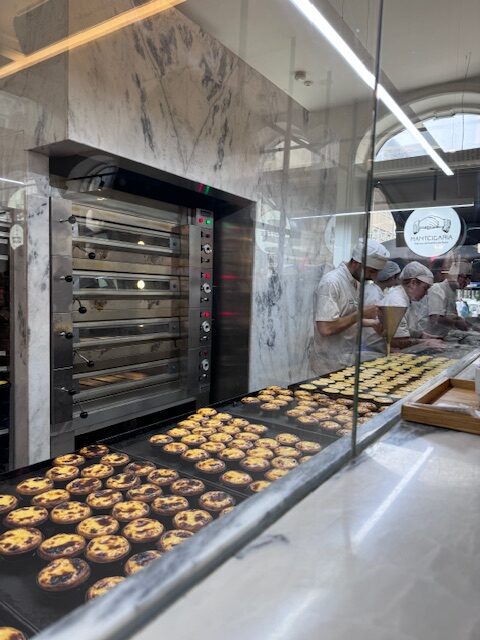
Tracking down the best pastéis de nata is one of the most important things to do in Porto with kids, and I am not being ironic. Manteigaria and Fábrica da Nata are the two most popular spots; at Fábrica da Nata on Rua de Santa Catarina you can watch the tarts being made through a window, which buys approximately four peaceful minutes while your child is mesmerized. They are best warm. Order more than you think you need.
Dinner When Your Kids Reject Portuguese Food
My kids were enthusiastic about approximately none of the traditional Portuguese food options in Porto, and I am not going to pretend we pushed through it heroically. We ate at Pizzeria Bella Mia!, right around the corner from our apartment on Rua das Flores, and it was legitimately excellent pizza. Zero regrets. If your kids are similarly resistant, this is your save. For brunch the next morning, Hungry Biker Cafe was a big hit with our family — relaxed, good food, kid-tolerant. Porto with kids, and Portugal in general, meant getting creative about what we ate. It might not be the best cultural experience but hungry kids are worse!
Day 2: The Bridge, the River, and the Port Wine Caves
Ponte Dom Luís I
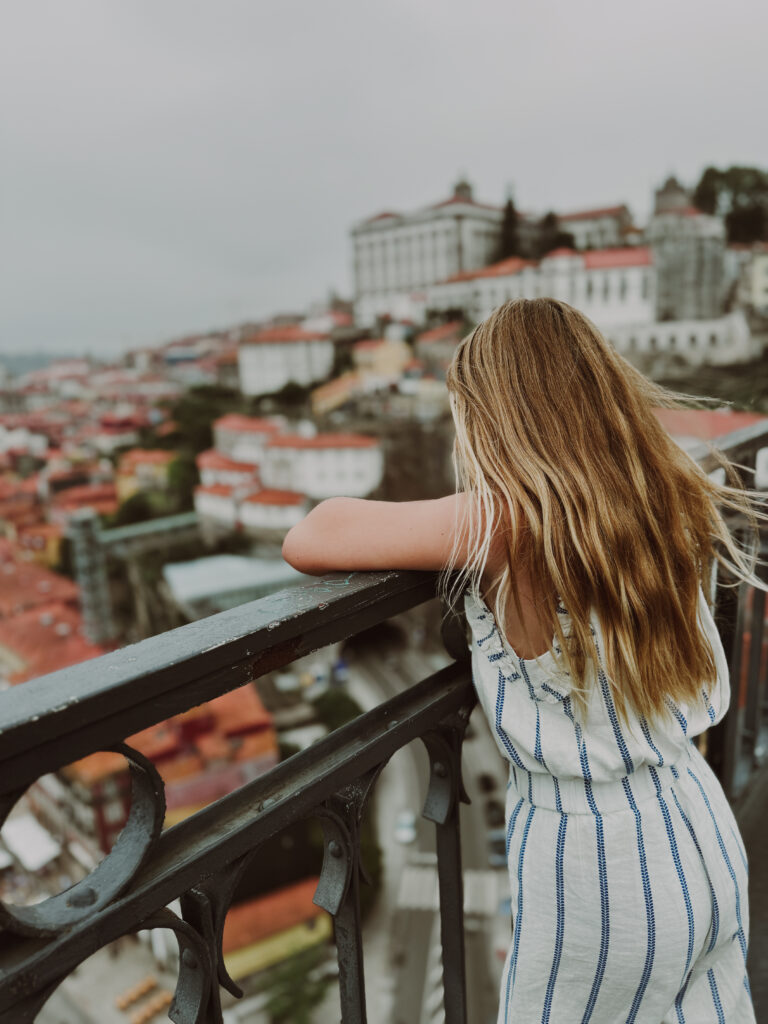
Crossing the Ponte Dom Luís I is one of the best things to do in Porto with kids, and I would put it among my favorite travel experiences period. The bridge spans the Douro in two tiers — the lower level carries cars, the upper level is pedestrians and metro. Walk the upper level. It sits about 60 meters above the river and the views in both directions are genuinely extraordinary.
It is safe for kids. The railings are solid and substantial, there is plenty of walking room, and the trams that pass on the upper level are very easy to see and hear coming. Just keep kids close when a tram approaches. The crossing takes 15 to 20 minutes at a relaxed pace — you will stop constantly for photos. Walk it at least one direction and take the metro back if your group is flagging.
The Ribeira Promenade
After crossing, or before — it works in either direction — spend time along the Ribeira. This is the postcard version of Porto: pastel-colored buildings stacked up the hillside, boats on the Douro, café tables spreading toward the water. It is genuinely beautiful and relaxed, kids have room to move, and there is no agenda required. Grab something to eat, sit near the water, and let the afternoon slow down. It earns its reputation.
Port Wine Caves in Vila Nova de Gaia
The Gaia side of the river is where the port wine cellars are. The big names — Sandeman, Taylor’s, Calém — all offer tours and tastings. This is primarily for the adults, but most cellars allow kids on the tour portion and have non-alcoholic options for them. It makes for a genuinely interesting stop if your kids have any curiosity about how things are made. Budget one to two hours.
Practical Tips for Porto with Kids
On the hills: Porto is hilly, but I found it more manageable than Lisbon. The area around Rua das Flores is relatively central and well-positioned for getting to most sights without extreme elevation changes. That said, bring a carrier as backup for toddlers and plan routes with some awareness of the terrain.
On strollers: They work, but a stroller with actual wheels (not a lightweight travel umbrella stroller) handles cobblestones far better. A carrier gives you more flexibility on the steeper sections.
On food: Kids’ menus are rare. Portions are large, sharing is normal, and nobody will look at you sideways for ordering two mains and splitting them across four people. If your kids are not adventurous eaters, know that pizza, pasta, and sandwiches are never far away.
On getting around: The Andante card covers the metro, buses, trams, and the funicular — worth getting for a two-day visit. Uber and taxis are easy for anything the metro doesn’t reach.
What about the Douro Valley? It is very much worth it and completely doable from Porto. The scenic train ride takes about two hours and is beautiful in its own right. By car you can be in the heart of wine country in under an hour. It is at the top of our list for a return trip — if you have three or four days in Porto, add it.
Best time to visit Porto with kids: April through June and September through October are the sweet spots — mild temperatures, manageable crowds, and everything operating. Summer is hot and busy. Winter is quiet and rainy but still workable if you do not mind slower days.
Why Porto Beat Lisbon for Us
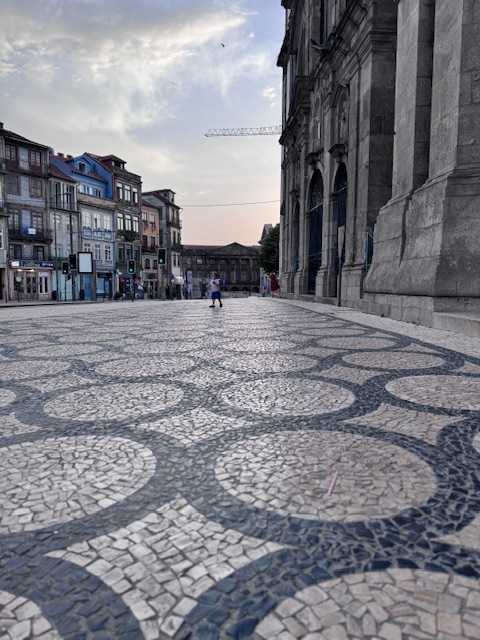
I will just say it plainly: if you can only pick one, I would pick Porto. Lisbon is worth seeing — genuinely — but Porto felt more like a place and less like a destination. Less performance of Portugal for tourists, more Portugal actually existing. We wandered, ate good food, found the best tiles of the entire trip in a cathedral cloister that half the tourists had walked past, stood on the bridge and looked at one of the best views in Europe, and came home wishing we had booked an extra two days.
Porto with kids is not the consolation prize on a Portugal itinerary. For us, it was the highlight.
Also in this Portugal series: Lisbon with Kids | Vila Vita Parc Review | Best Algarve Beaches with Kids