Portugal with Kids: The Complete Family Travel Guide

If you are planning a Portugal with kids trip and have not quite committed yet, let me be the person who closes that tab where you’re looking at the Amalfi Coast. Portugal is easier, cheaper, and more genuinely welcoming to families than almost any country in Western Europe. We did tWO weeks there with our kids at ages 4 and 9 as part of a longer trip through Spain and Portugal, covered the Algarve, Lisbon, and Porto, and came home with a list of reasons to go back before we even unpacked.
This is the guide that ties it all together. Every region, every practical question, every honest thing I wish someone had told me before we went.
Is Portugal Good for Kids?
Yes. Unambiguously yes.
Portugal with kids works for several overlapping reasons that other European destinations cannot fully match. The country is genuinely welcoming to children at a cultural level — not just tolerant, but actually warm about it. Kids are expected at restaurants, at museums, at nice hotels. You will not feel like you are ruining someone’s evening by having children at the table. They are so accepting of children that families with kids under two get to skip the line and most monuments! How amazing is that?!
The food is not going to fight your family. The country is safe. The infrastructure — airports, trains, motorways — is modern and well-maintained. Entry is straightforward for US passport holders. And the tourism industry has matured enough that you can book a genuinely luxurious family trip without paying Paris prices.
A family trip to Portugal also delivers a range of geography that is hard to beat in ten days. You can do beach time, city time, and a small dose of ancient history all in one trip without it feeling rushed. That combination is genuinely rare.
The Three Regions You Need to Know
Planning a Portugal with kids trip means making decisions about which regions to include. Here is the honest breakdown.
The Algarve: Beach Days and Jaw-Dropping Cliffs
The Algarve is Portugal’s southern coast and the part that first comes to mind when people think of Portuguese beaches. The reality is both better and slightly different than the brochures suggest.
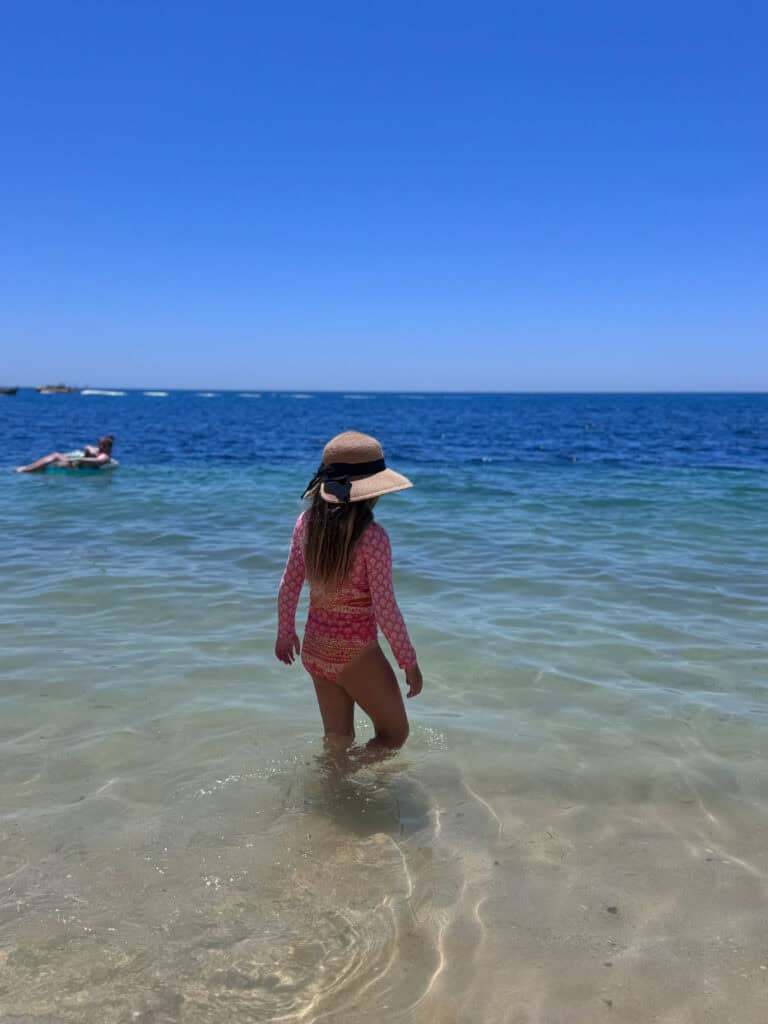
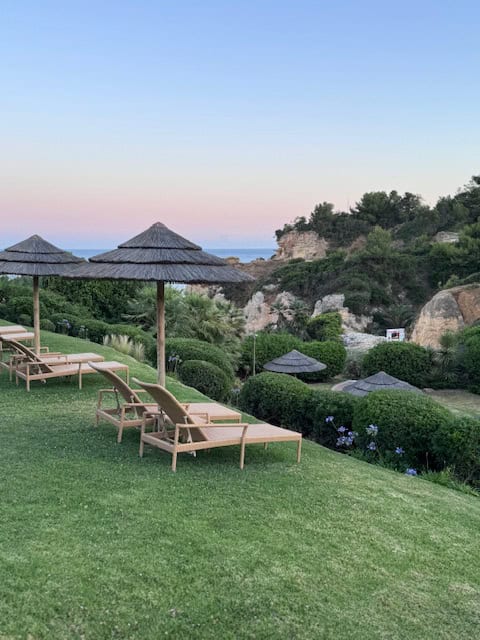
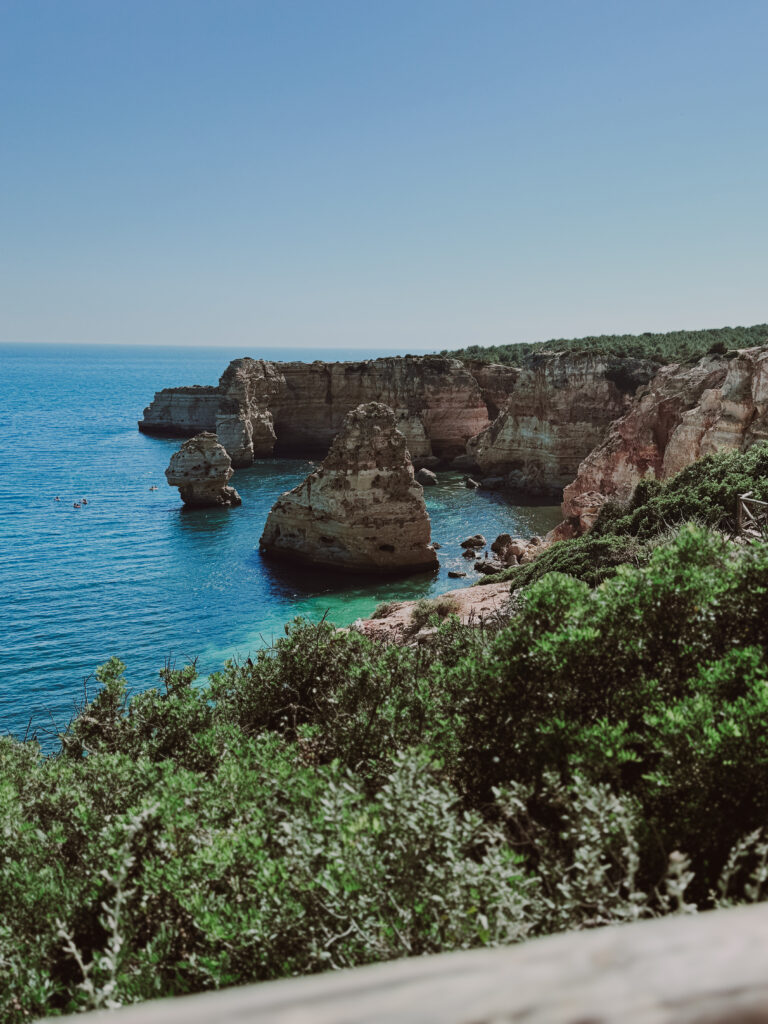
The scenery earns every superlative. Praia da Falésia’s six-kilometer stretch of dramatic orange and red cliffs is one of the most visually stunning beaches anywhere in Europe. Praia da Marinha’s rock arches and limestone formations are unlike anything I had seen anywhere before.
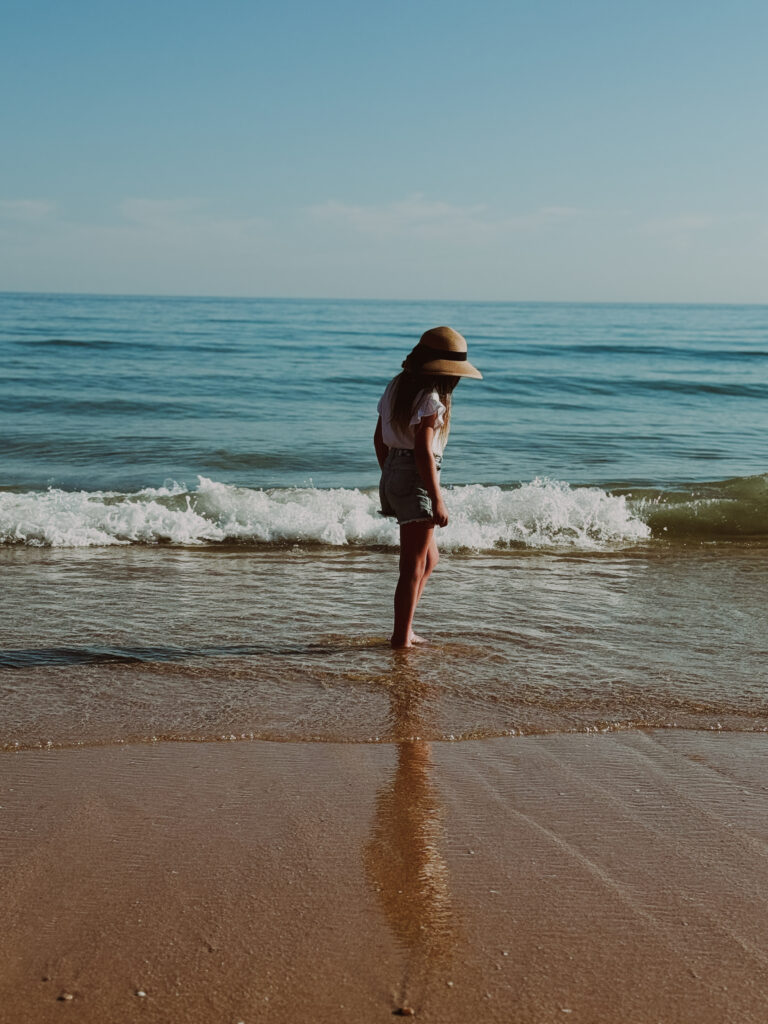
The honest reality check: this is the Atlantic, not the Mediterranean. Water temperatures in June hover around 65°F. Our 4-year-old went in without hesitation. I made different choices. Set realistic expectations and your kids will have an excellent time regardless.
For families, the best beach bases are Praia da Falésia (full facilities, wide flat sand, cliff shelter from wind) and Praia de São Rafael (small cove, sheltered, manageable access). Full breakdown in the best Algarve beaches with kids guide.
For accommodations, Vila Vita Parc is the best family resort we have ever stayed in. Seven pools (three dedicated to kids), a kids’ club, babysitting, mini golf, a 2-Michelin-star restaurant on property, and a beach club a 10-minute shuttle away. We met a couple at the pool who had been returning for more than 20 years. After three nights, we completely understood why.
Lisbon: History, Hills, and the Best Cooking Class of Your Life
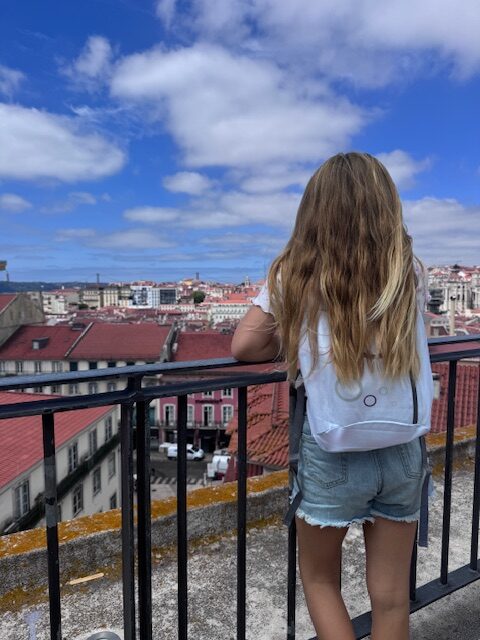
Lisbon is the grand one. Terracotta rooftops, azulejo-tiled facades, Jerónimos Monastery, the Tagus River, the time-capsule neighborhood of Alfama. It delivers on the photos.
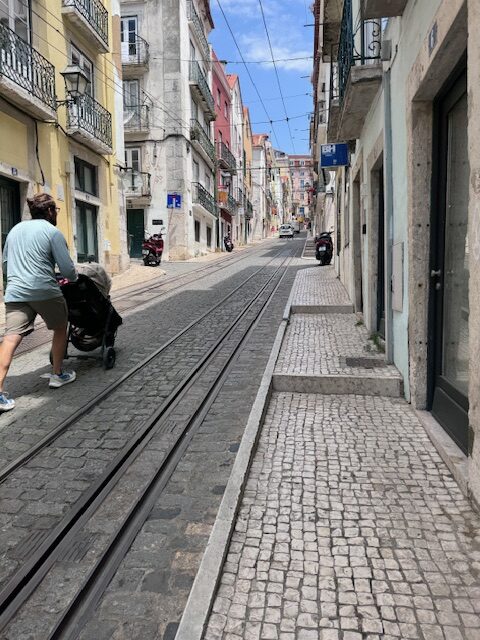
It also has hills. This comes up in every guide and somehow still surprises people. Lisbon is hilly in the way San Francisco is hilly, except the hills frequently dead-end into full staircases. One evening, walking back to our hotel alone with both kids, a kind stranger offered to push my stroller uphill. I said yes immediately. The fact that it did not even cross my mind they might be trying to kidnap my child tells you everything about how tired I was.
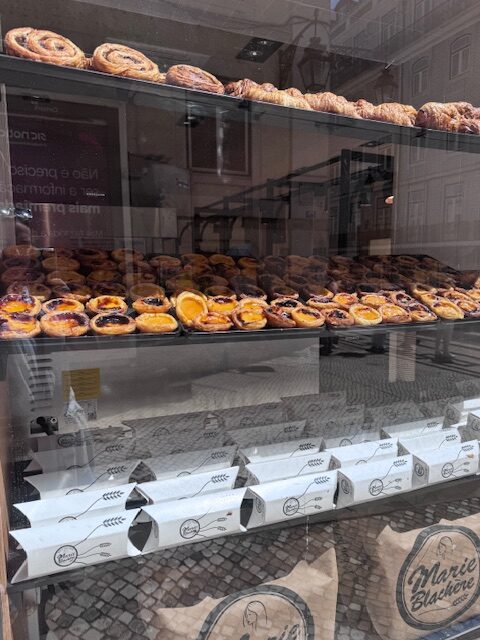
The absolute highlight of our entire Portugal trip was the Nat’elier Pastel de Nata Masterclass on Day 3. This is an actual cooking class held inside a working bakery where you make the tarts from scratch — puff pastry, custard, the molds, everything. We left with three tarts, the recipe, and a certificate. My older daughter wants to be a baker when she grows up, and doing this class with her in a foreign country was one of those travel moments that does not feel like a memory until it already is one. Book it before you leave home.
For where to stay, Martinhal Lisbon Chiado is the correct answer. Family-configured rooms with bunk beds for the kids, a kids’ club bookable in one-hour private blocks, and a location in Chiado that is walkable to everything. There is a pool access hack worth knowing: dine at a Martinhal property in Cascais or Sagres and you get pool access at the Chiado location.
Full Lisbon breakdown: Lisbon with Kids.
Porto: The One That Won
Porto beat Lisbon for us. I want to be direct about that.
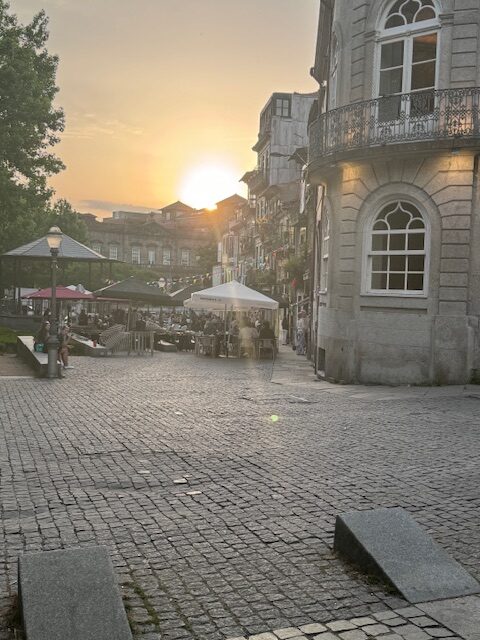
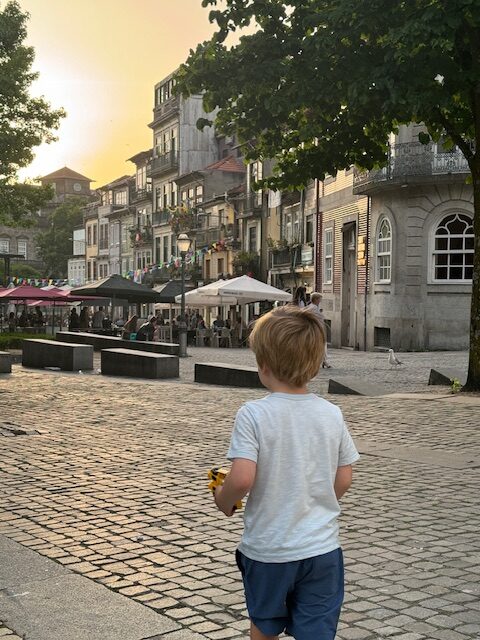
Lisbon is grander. Porto is better for everyday family life. It is smaller, more compact, and — in my experience — more manageable with children. The historic center is walkable without the degree of hill-climbing that Lisbon demands. The city has a personality that is hard to explain: old-world without being stiff, visually extraordinary without being overrun.
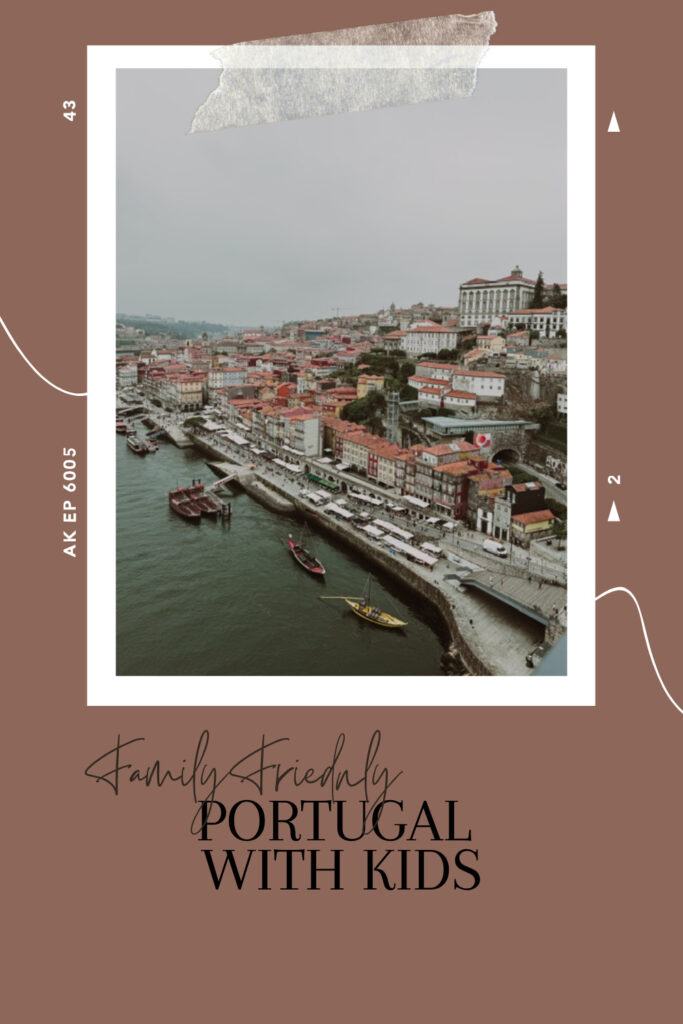
The São Bento train station azulejos. The Sé do Porto cathedral cloister, which has some of the best tile work of the entire trip and which almost every tourist walks past. The upper level of Ponte Dom Luís I, 60 meters above the Douro River, with the best view in Europe. The Ribeira promenade with pastel buildings stacked up the hillside. Port wine caves across the river where kids get grape juice.
We stayed at Torel 1884, a Michelin Key boutique property split across two buildings. Our apartment was on Rua das Flores, one of Porto’s most beautiful pedestrian-only streets — roughly 500 years old, lined with azulejo-covered buildings, restaurants, and live music drifting through at unpredictable hours. Walking out your front door onto that street every morning was genuinely lovely.
If you are planning a family trip to Portugal and considering skipping Porto, reconsider. I would cut Lisbon days before Porto days.
Full Porto breakdown: Porto with Kids.
Best Time to Visit Portugal with Kids
For a family trip to Portugal, the sweet spots are May through early June and September through October.
These windows give you warm temperatures (mid-70s in Lisbon and Porto, beach-appropriate in the Algarve), manageable crowds, and kids who are still capable of functioning in the heat. July and August are hotter and significantly more crowded, particularly in Lisbon. They are not impossible, but you will be fighting the summer tourist infrastructure on every front.
We went in late June and it worked, but the Algarve heat by 11am was serious. Our best strategy: hotel pool in the morning, beach around 4pm, sunset on the cliffs. This is actually how the locals do it, and it’s the right call.
Winter is quiet, rainy, and workable if you prioritize cities over beaches. The Algarve is much less interesting in winter; Lisbon and Porto hold up.
How to Get Around
Fly into Lisbon. Almost every US connection routes through Lisbon and it is the logical starting point for a Lisbon-Algarve-Porto routing.
Rent a car for the Algarve. The drive from Lisbon south is 2.5 hours on motorway. You cannot beach-hop in the Algarve without a car. Uber is inconsistent in remote beach areas and taxis are expensive for multiple daily trips.
Take the train between Lisbon and Porto. The Alfa Pendular from Lisbon Santa Apolónia to Porto Campanhã takes about 3 hours and is one of the more pleasant intercity train journeys in Europe. Book through cp.pt in advance.
Within cities: Walk, metro, or taxi. You do not need a car in Lisbon or Porto.
One non-negotiable: budget 3 hours for Porto airport, not 2. International security and customs queues there can be genuinely brutal. There is almost nothing to eat past security, so bring snacks.
If you want to claim VAT refunds on large purchases, process this at the airport before you check your bags. Ask for a tax-free receipt at the point of purchase and bring your passport when shopping. I carry a photo of mine because I always forget the actual thing.

Where to Stay: Our Picks in Each Region
A Portugal with kids trip is only as good as the accommodations. Here is the honest summary.
Algarve: Vila Vita Parc in Porches. Best family hotel we have ever stayed at, full stop. Clifftop setting, private beach, 7 pools, kids’ club, 2-Michelin-star restaurant. Worth every point or dollar.
Lisbon: Martinhal Lisbon Chiado. Family-configured apartments with bunk beds, kids’ club, central neighborhood. The hotel that actually understands what traveling with children requires.
Porto: Torel 1884. Boutique Michelin Key property split across two buildings. The apartment building is on Rua das Flores, which is reason enough to book it.
Food: The Honest Family Reality
Portugal will not disappoint you at a meal. The bread is outstanding, the olive oil is exceptional, the seafood is excellent, and pastéis de nata are one of the great foods of Europe. Eat them everywhere, daily, without apology.
The challenge for families: traditional Portuguese cuisine leans heavily on fish, specifically on bacalhau (salt-dried cod), prepared in dozens of ways, many of which are bony and strong-flavored. We attempted a traditional restaurant early in the trip. The kids were done after three bites. Even the adults found it a commitment.
This is not a reason to avoid Portuguese food. It is a reason to have a backup plan if your children are picky eaters.
In practice: pizza is never far away and is always excellent. Our best meal in Portugal was at Lupita Pizzaria in Lisbon, a tiny Neapolitan spot that ranked among the top 50 pizzas in Europe in 2024. The no-reservation policy means a sidewalk wait. It is completely worth it.
The Time Out Market in Lisbon (26 restaurant stalls, communal tables, open until midnight) is the best family dinner option when energy is low and preferences diverge. Go before 5:30pm to get seats.
Portions throughout Portugal are large. Sharing is normal. Nobody will look at you sideways for ordering two mains for four people.

The Priority Law (And Why You Need to Know About It)
This section is for families doing a Portugal with kids trip and nobody tells you this:
Portugal has a legal priority law that gives families traveling with young children the right to priority queuing at banks, museums, tourist attractions, and shops. It is not a favor you are asking for. It is a legal right.
Look for a sign with a stroller or wheelchair icon at the entrance, or walk directly to staff and tell them you are traveling with young children (the Portuguese word is “criança”). This works at Jerónimos Monastery, Castelo de São Jorge, and most major attractions.
My kids were slightly on the older side to use it on our trip, but at Jerónimos Monastery a staff member came over and explained we should not be waiting because my son was napping in the stroller. We skipped the line. Even with older children, it is worth attempting.
The Cobblestone and Hills Problem
Both Lisbon and Porto are hilly and covered in cobblestone. Plan for this before you arrive.
Bring a soft-structured carrier as backup even if your child is usually walking. At steep sections of Lisbon especially, a carrier is faster and easier than fighting a stroller. Lightweight umbrella strollers maneuver better than full frames on cobblestone.
Map your routes each morning. Streets that look connected on Google Maps are sometimes staircases.
Porto is hilly but I found it more manageable than Lisbon. The area around Rua das Flores is well-positioned for reaching most sights without extreme elevation changes.
How to Combine Portugal with Spain
We did both countries overland, entering Spain through Madrid and working south through Seville, Granada, and Toledo before crossing into Portugal. If a combined trip is on your radar, the Spain and Portugal itinerary for families covers the big logistics decisions.
Short version: you can absolutely combine both countries with kids ages 4 and older. The overland crossing is easy. The bigger question is how to split your time, and the answer depends on what your family prioritizes: beach time, cities, or both.
Portugal with Kids: Sample Itinerary
For a portugal with kids trip of 10 days, the routing that works is Lisbon (3 nights) → Algarve (4 nights) → Porto (3 nights). This gives you real time in each place without sprinting.
You will do a day trip to Sintra from Lisbon. You will have actual beach days in the Algarve rather than a drive-by. And you will end in Porto, which you will wish you had booked for longer.
Full day-by-day itinerary in the 10 days in Portugal with Kids guide.
For a shorter trip, the hard choice is Lisbon plus one region. If you have to pick: Algarve for beach families, Porto for culture-first families. I would give up Lisbon before I gave up Porto.

Practical Tips for a Family Trip to Portugal
Packing: You can do this trip in a carry-on each. Three bags, two kids, no checked luggage. The full breakdown is in the Portugal packing list.
Church dress codes: Covered shoulders and knees for cathedral visits. Build it into your morning outfit rather than scrambling for a scarf at the door.
Language: English is widely spoken in tourist areas across all three regions. Learning a few Portuguese words (obrigado/a for thank you, por favor for please) goes a long way.
Currency: Euro. Cards are accepted everywhere.
Safety: Portugal consistently ranks among the safest countries in Europe. We never felt unsafe anywhere.
Beach supplies: Bring your own beach gear from a supermarket before your first beach day. The markup near beaches is steep, and rentals are only available at the larger beaches.
Sintra: If you have the energy for a day trip from Lisbon, do it. Book timed entry tickets in advance. We were too depleted after our beach week to make it happen and I still think about it.
FAQs About Portugal with Kids
Is Portugal kid-friendly? Very. The priority law, the welcoming culture, the manageable pace, and the excellent food all make portugal with kids one of the easiest trips you can plan in Europe.
How many days do you need? Ten days covers Lisbon, Algarve, and Porto comfortably. Seven days forces you to choose two regions. Fourteen days lets you add day trips and breathe.
Is Portugal safe for families? Yes. It ranks consistently among the safest countries in Europe.
What age is best for a family trip to portugal? We went with ages 4 and 9 and it worked excellently. I would hesitate slightly with children under 2 because of the cobblestones and hills, but Portugal is genuinely adaptable for most ages.
Do you need a car? For the Algarve, yes. For Lisbon and Porto, no.
Is Portugal expensive? Relative to France, Italy, or the UK, no. It is the most affordable Western European destination we have traveled to. A family trip to portugal at the mid-range to luxury level costs meaningfully less than comparable trips to Paris or the Amalfi Coast.
The Bottom Line
Portugal with kids is one of the best trips you can plan. The food, the culture, the safety, the luxury hotel options, the beaches, the tiles — all of it works.
Go to the Algarve for the cliffs. Go to Lisbon for Jerónimos, Alfama, and Lupita pizza. Go to Porto for the bridge, the cloister at the Sé, and a city that will unexpectedly become your favorite of the trip.
Then go back.
In this Portugal series: